
Hampton Surveyors has been based in Hampton since our founding — and between our team, we have surveyed more properties in this corner of West London than we can count. We know the streets, the property types, the ground conditions, the common defects, and the quirks of the local market inside out.
This guide is for anyone thinking of buying property in Hampton, or in the wider area including Twickenham, Feltham, Hampton Court, East Molesey, Sunbury-on-Thames and neighbouring communities. We share the things that only a local surveyor knows — the stuff you won't find in an estate agent's brochure.
About Hampton
Hampton is a suburban district in the London Borough of Richmond upon Thames, located on the south bank of the River Thames approximately 13 miles south-west of central London. It sits between Twickenham to the north-east and Hampton Court to the south-east, and is bordered by the Thames to the north and west.
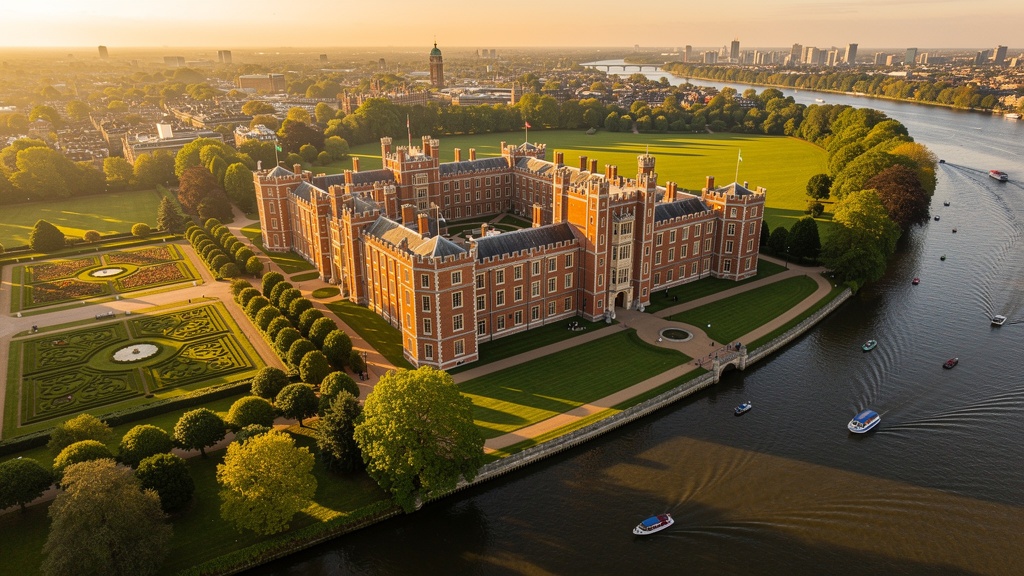
The area is perhaps best known internationally for Hampton Court Palace — the Tudor palace built by Cardinal Wolsey and later expanded by Henry VIII — which anchors the eastern end of the area and draws tourists from around the world. But for residents, Hampton is valued for its village feel, exceptional green spaces (including Bushy Park, one of the eight Royal Parks), outstanding transport links via Hampton railway station on the Shepperton line, and direct access to the Thames towpath.
Hampton has consistently been one of the most desirable residential addresses in West London, with a housing stock that combines grand detached homes, elegant Victorian and Edwardian terraces, inter-war semis, post-war estates, and modern riverside developments.
Property Types in Hampton
Understanding the local property mix is the first step to understanding the survey risks. Hampton's housing stock can be broadly categorised as follows:
Victorian and Edwardian Terraces (1870–1914)
The most common property type in the older residential streets around Hampton village, Church Street, and the roads running south from Hampton Court Road. These properties are typically two-storey, brick-built terraces with slate or clay tile roofs, timber sash windows, solid or early cavity walls, and original cast-iron drainage.
From a surveying perspective, Victorian and Edwardian terraces present several recurring challenges in Hampton specifically:
- Rising damp and penetrating damp: Original solid walls have no damp-proof course, or a damp-proof course that has failed. Ground levels are often too high relative to the original DPC level. Original single-brick rear extensions are particularly prone to penetrating damp.
- Original timber floors: Ground-floor timber suspended floors are vulnerable to rot where ventilation is inadequate or where subfloor voids have been blocked by later works. We find wet rot and dry rot surprisingly often beneath ground-floor floorboards in these properties.
- Chimney stacks: Many properties retain their original chimney stacks, often with failed or deteriorating flaunching at the top, loose mortar joints, and internal dampness to chimney breasts where flues are no longer used and have not been properly capped.
- Roof structures: Original cut-rafter roofs can have undersized ridge boards, spreads caused by outward thrust on external walls, and degraded sarking felt (or original no sarking felt at all).
Inter-War Properties (1919–1939)
Much of Hampton's suburban expansion occurred in the 1920s and 1930s, producing the semi-detached houses that characterise roads such as those off Percy Road, Hanworth Road, and the Ormond estate. These are typically three-bedroom cavity wall construction with tile-hung upper storeys, concrete roof tiles or clay pantiles, and metal Crittall windows.
Common survey issues in inter-war properties include:
- Cavity wall tie corrosion: Steel wall ties installed in the 1920s and 1930s are now reaching the end of their design life and are frequently found to be corroded, causing horizontal cracking to external brick courses and, in severe cases, risk of wall delamination.
- Metal windows: Original Crittall steel windows are prone to corrosion, and gaps in the frame/wall junction allow water infiltration and internal damp staining.
- Concrete roof tiles: Original concrete interlocking tiles frequently degrade over time, losing their surface coating and becoming porous. They can shed algae growth and develop hairline cracks that allow water ingress.
Post-War and Modern Houses (1945–Present)
Post-war housing in Hampton and surrounding areas includes a wide range of construction types — from traditional brick-and-block to non-traditional construction methods (prefabricated concrete panels, timber frame, steel frame) introduced in the 1940s–70s. Some non-traditional construction methods have since been designated as defective under the Housing Defects Act 1984, and properties built this way can be difficult or impossible to mortgage without specialist insurer approval.
We strongly recommend a Level 3 Building Survey for any property of uncertain construction type built between 1945 and 1975.
Riverside and Waterside Properties
The Thames riverfront and adjacent areas include some of the most desirable — and some of the most complex — residential property in Hampton. Riverside properties face specific risks including:
- Flood risk: Hampton's riverside has been affected by significant flooding events, most recently during the 2014 Thames floods. Always check the Environment Agency flood risk map and commission a flood risk assessment before buying a riverside property. Check whether the property is in Flood Zone 2 or 3, and whether it has appropriate buildings insurance cover.
- Ground conditions: Former alluvial Thames flood plain soils can be soft and compressible, creating greater settlement risk for older shallow foundations.
- Moorings and riparian rights: Properties fronting the Thames may have riparian rights, mooring rights, or obligations as a riparian owner (including responsibility for bank maintenance). These are title and legal matters — flag them to your solicitor.
The Most Common Defects We Find in Hampton Properties
Based on our surveys across hundreds of Hampton properties, these are the defects we encounter most frequently:
- Damp penetration through solid front bay windows — Victorian bay windows are among the most common sources of damp ingress we see. The junction between the bay roof and main wall, and the sub-frame junction of the window itself, are repeatedly vulnerable.
- Failed flat roof extensions — Inter-war and post-war rear extensions frequently have flat roofs that are at or past the end of their serviceable life. A failed flat roof can cause severe internal water damage very quickly.
- Clay soil subsidence from tree roots — Hampton and Bushy Park's large tree population means tree-related subsidence is a recurring theme. Oaks, willows, horse chestnuts and poplars are the most common culprits.
- Cast iron drainage failure — Original cast iron drainage beneath Victorian properties has a finite life. Fractured drains can cause soil erosion beneath foundations, internal smells, and damp ingress.
- Inadequate loft insulation and ventilation — Particularly in 1970s–90s properties where insulation was installed to the then-current standard (now considered inadequate) and roof ventilation was often omitted.
Which Survey Do You Need?
As a general guide for Hampton property buyers:
- Modern flat (post-1980, standard construction, good condition): Level 2 RICS Homebuyer Report is usually appropriate, combined with a thermal imaging scan if buying in autumn/winter.
- Inter-war semi, 1970s–80s house in reasonable condition: Level 2 Homebuyer Report, upgrading to Level 3 if the inspection reveals concerns.
- Victorian or Edwardian terrace or conversion: Always commission a Level 3 Building Survey. These properties have too many potential hidden defects for a Level 2 report to be adequate.
- Riverside property, non-traditional construction, any property showing cracks or damp: Level 3 Building Survey plus specialist investigations as indicated.
- New-build: Snagging Survey before completion.
"Having surveyed property in Hampton for over fifteen years, I can tell you with confidence that spending £595 on a Level 3 Building Survey before buying a Victorian terrace in this area is one of the best investments you can make. We have found problems that saved our clients tens of thousands of pounds more times than I can count."
— James Hartley BSc MRICS MCIOB, Principal Surveyor, Hampton Surveyors
Frequently Asked Questions
Parts of Hampton — particularly properties close to the River Thames and those in the former flood plain — carry a meaningful flood risk. The Thames Tideway Project and existing flood defences significantly reduce risk in many areas, but do not eliminate it entirely. Always check the Environment Agency flood map, ask about previous flood history, and confirm buildings insurance is available and affordable before purchasing any riverside or low-lying property in the area.
Yes. Hampton sits largely on London clay, which is shrink-swell clay — it contracts in dry conditions and expands in wet weather. Combined with the abundant mature tree coverage in Bushy Park and residential gardens, tree-related subsidence is a genuine and recurring risk. Our Level 3 Building Surveys always include an assessment of subsidence risk factors including tree proximity and ground conditions.
Absolutely. We survey properties throughout the wider area, including Twickenham, Feltham, Hampton Court, East Molesey, Sunbury-on-Thames, Kingston upon Thames, Richmond and beyond. Our local knowledge extends across the whole of South West London and the Thames corridor.
Hampton has excellent transport links. Hampton station on the Shepperton line provides regular services to London Waterloo (approximately 55 minutes). Hampton Court station (East Molesey, a short walk across the bridge) also provides fast Waterloo services (approximately 35 minutes). The A316 provides road access to the M3 and central London. The area is also well served by bus routes to Kingston, Twickenham and Feltham.
Victorian terraces in Hampton have historically performed very well as investments — the combination of desirable location, period character, and finite supply has underpinned strong capital growth. But they are only a good investment if you go in with clear eyes about the condition and maintenance requirements. A well-maintained Victorian terrace is a joy; a neglected one with hidden structural and damp issues can be a money pit. A thorough Level 3 Building Survey before purchase is essential.
Buying in Hampton? Let Us Help
Hampton Surveyors is your local RICS building surveyor. We know Hampton and the surrounding area better than any national firm. Get in touch for an instant quote.
Get an Instant Quote Areas We Cover