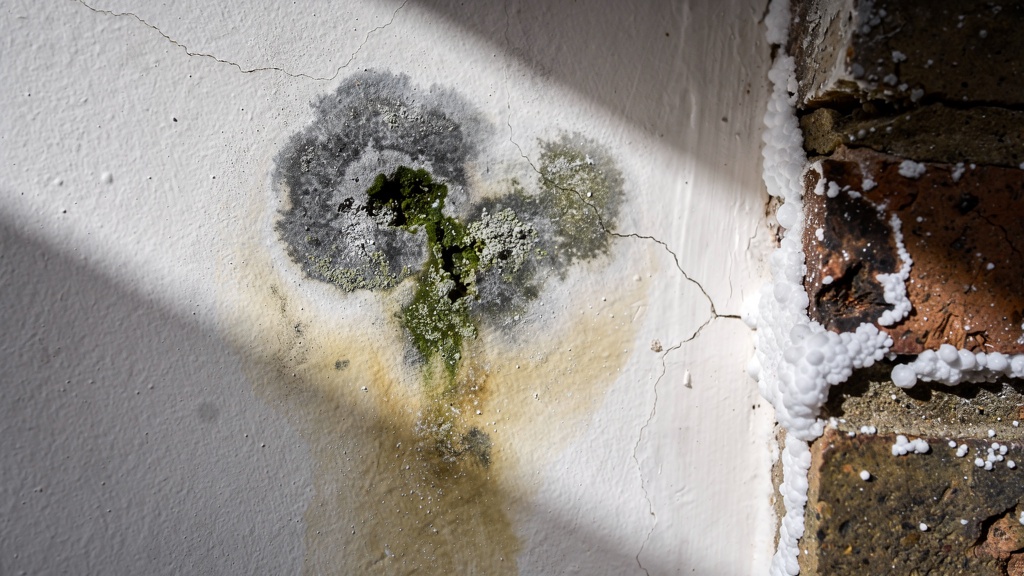
Damp is, without question, the single most common finding in our surveys of Victorian and Edwardian properties across Hampton, Twickenham and the surrounding areas. And it's also, I'd argue, the most frequently misdiagnosed.
I've had countless buyers contact us after a previous survey (from another firm) told them they had "severe rising damp requiring chemical injection treatment throughout the ground floor." When we inspect the property ourselves, we sometimes find the actual cause is entirely different — a blocked airbrick, a raised external ground level, a leaking downpipe hidden behind a soil stack. The treatment for each of these is completely different, and the wrong treatment can actually make things worse.
This guide is my attempt to demystify damp in period properties once and for all.
The Three Types of Damp in Period Properties
1. Rising Damp
True rising damp occurs when ground moisture travels upward through a wall by capillary action — essentially, the wall soaks up water from the ground. It usually shows as a tidemark on the lower section of a wall (typically below 1 metre), often with white salt deposits (efflorescence) and deteriorating plaster.
The important nuance: genuine rising damp is actually relatively rare in well-maintained Victorian properties. Many buildings of this era had no damp-proof course at all, but relied on breathable lime mortar and plaster to manage moisture — a system that works perfectly well when not interfered with. It's when modern impermeable materials (cement, vinyl paint, dense plaster) are introduced that problems begin.
True rising damp also requires a continuous water source — typically from inadequate drainage, raised ground levels, or saturated subsoil. Before prescribing treatment, a good surveyor will always look for (and eliminate) external causes first.
2. Penetrating Damp
Penetrating damp enters from outside — through defective pointing, cracks, failing render, window and door frames, or leaking rainwater goods (gutters and downpipes). It can occur at any level of the wall, not just the base.
This is probably the most common cause of damp in Victorian properties in our area. A cracked gutter can silently deliver hundreds of litres of water per year directly into a wall. A missing pointing joint on a chimney can allow water straight into the roof space. These are the kinds of defects our surveys always look for — and the repair is usually straightforward and inexpensive if caught early.
3. Condensation
Often mistaken for rising or penetrating damp, condensation is caused by warm, moist air coming into contact with cold surfaces. It tends to appear in corners, on north-facing walls and around thermal bridges (areas of low insulation). The most telling sign is that it follows thermal patterns rather than the geometry of water ingress.
Condensation has become more prevalent in older properties since they were insulated and draught-proofed without adequate ventilation being added. In solid-wall Victorian properties, this is particularly common.
Why Getting the Diagnosis Right Matters
I want to be direct about something: the damp-proofing industry has a significant commercial interest in diagnosing rising damp. Chemical damp-proof injection courses — the standard "solution" for rising damp — cost anywhere from £2,000 to £10,000+ for a full ground floor. If penetrating damp or condensation is actually the cause, this treatment will have zero effect.
A Property Care Association study found that a significant proportion of properties referred for damp-proofing treatment actually had misdiagnosed damp — the cause was something other than rising damp. An independent RICS surveyor has no financial interest in recommending one treatment over another. That's one of the most compelling reasons to get an independent survey rather than relying on a free damp survey from a damp-proofing company.
"The damp-proof injection salesman will always find rising damp. The independent surveyor will always find the actual cause."
What to Do If Your Survey Flags Damp
If your Hampton Surveyors report identifies damp in a property you're buying, here's the sensible sequence of steps:
- Don't panic. Damp in a Victorian property is common and usually very fixable. It rarely means the property is unsound.
- Understand the cause. Call your surveyor and ask them to explain exactly what they believe the source is. Is it penetrating? Rising? Condensation? A combination?
- Get specialist investigations if needed. For significant or unclear damp issues, we may recommend a specialist investigation — not by a damp-proofing company (who have an interest in the outcome) but by an independent RICS surveyor or specialist.
- Obtain repair quotes. Get two or three quotes from contractors for the relevant work — re-pointing, gutter repair, improving ventilation, replastering. This gives you evidence for renegotiation.
- Negotiate. Use the repair costs as the basis for a price reduction or request that the vendor carries out the repairs before exchange.
Preventing Damp in Victorian Properties
If you own a Victorian property and want to stay ahead of damp, here's what genuinely works:
- Clear and maintain gutters annually — blocked gutters are responsible for a huge proportion of penetrating damp in period properties
- Repoint deteriorating mortar using a breathable lime mortar (not cement, which traps moisture)
- Keep airbricks clear — sub-floor ventilation is critical in properties with suspended timber floors
- Don't raise external ground levels above the existing damp-proof course (if there is one) or the floor level
- Maintain adequate ventilation — particularly in kitchens and bathrooms — and avoid blocking up original ventilation features
- Use breathable materials for any internal redecoration — lime plaster and mineral paint rather than cement render and vinyl emulsion
Damp FAQs
Old staining can indeed indicate resolved damp. But without specialist investigation, you can't know for certain. A moisture meter reading will tell you whether moisture is still active in the wall. Our surveys always include damp meter readings on flagged areas.
Guarantees from damp-proofing companies should be treated with caution. They are often limited in scope, apply only if the original company still exists, and don't cover consequential damage. More importantly, if the damp treatment addressed the wrong cause, the damp will return regardless of any guarantee. Always verify the current condition independently.
Many Victorian properties were built without any damp-proof course. This doesn't necessarily mean they have a damp problem — as noted above, the original breathable construction system was designed to manage moisture without one. The absence of a DPC only becomes a problem when impermeable modern materials are introduced, or when maintenance is neglected.
Buying a Victorian Property? Book a Survey First
Hampton Surveyors specialises in period properties across Hampton, Twickenham and Greater London. Our detailed reports identify damp correctly — before it costs you.
Get an Instant Quote Level 3 Building Survey