There's a house I surveyed a few years ago in Hampton Court — a beautiful late-Victorian semi-detached, double-fronted, full of original features. The buyers absolutely loved it. They'd been to see it three times and were convinced it was the one.
They asked about a Level 2 Homebuyer Report. I suggested — strongly — that they consider a Level 3 Building Survey instead. The property was built in 1898, had been extended twice, and had clearly been sitting vacant for some time. They agreed.
What we found: evidence of previous underpinning to the front bay (not disclosed by the vendor), significant penetrating damp in the rear extension, failing original cast iron drainage, and a roof structure that needed partial reconstruction. Combined estimated repair cost: approximately £48,000.
The buyers renegotiated a £32,000 reduction and went ahead. They still think it was the best decision of their lives — both the purchase and the Level 3 survey that gave them the facts they needed to make it safely.
What Is a Level 3 Building Survey?
The Level 3 Building Survey — formerly known as a Full Structural Survey or Building Survey — is the most comprehensive residential property inspection available. It goes significantly beyond the Level 2 Homebuyer Report in depth, scope and detail.
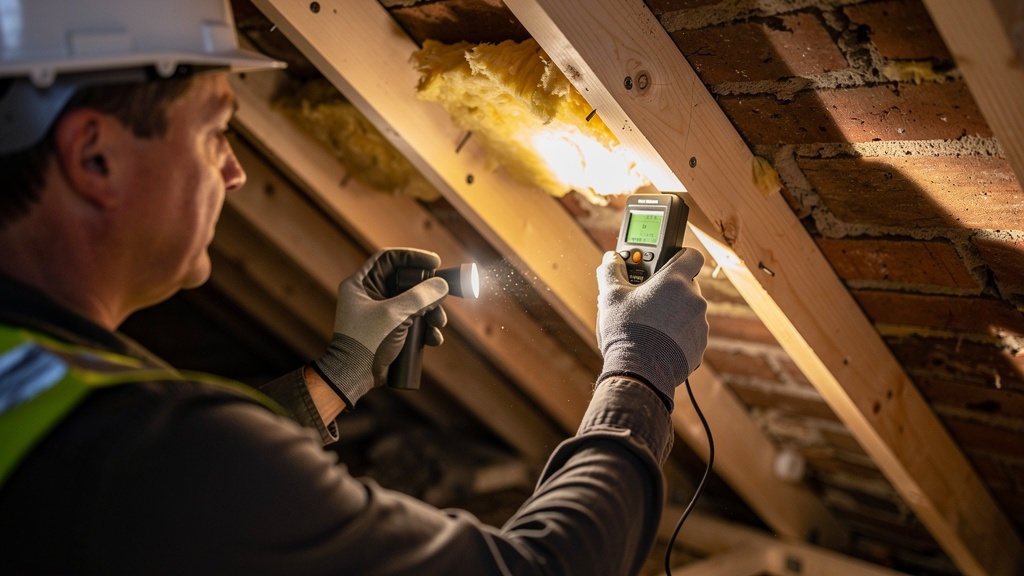
Where a Level 2 is a visual assessment of accessible areas, a Level 3 involves active investigation. Your surveyor will enter the roof space, lift inspection hatches where possible, probe suspected damp areas, check under floors where accessible, and produce a detailed technical report that describes not just what's wrong, but how it happened, what the risk is, and what remediation is recommended — along with indicative cost estimates.
At Hampton Surveyors, our Level 3 reports typically run to 65–85 pages for a standard period property — and sometimes considerably more for a complex or larger building.
What Does a Level 3 Building Survey Cover?
A Level 3 Building Survey is the most thorough survey available and covers every accessible element of the property in detail:
- Roof: Structure, covering, drainage, chimneys, flashings, party walls above roof level
- External walls: Construction type, pointing, render, cladding, windows and doors
- Internal walls and partitions: Construction, condition, movement evidence
- Floors: Construction, condition, deflection, damp under suspended floors
- Roof space: Structural timbers, insulation, ventilation, signs of leakage
- Cellars and basements: If present — construction, waterproofing, condition
- Damp: Detailed assessment using specialist moisture meters and probes
- Timber: Woodworm, wet rot, dry rot — all accessible timber surveyed
- Services: Electrical installation, plumbing, heating, drainage (visual)
- Grounds: Drainage, boundaries, outbuildings, vegetation (including Japanese knotweed)
Critically, the Level 3 also includes:
- Description of construction methods — particularly useful for period or unusual properties
- Estimated repair costs for all significant defects identified
- Maintenance recommendations for both immediate and longer-term care
- Legal matters to raise with your solicitor
When Do You Need a Level 3 Building Survey?
I'll be honest: in an ideal world, every buyer would commission a Level 3 survey. The depth of information it provides is invariably more useful than a Level 2. But the additional cost is significant, so here's a practical guide to when the Level 3 is truly necessary:
- Property built before 1919: Victorian and Edwardian properties have construction methods, materials and maintenance histories that the Level 2 simply isn't designed to fully assess
- Visible defects: Any cracking, damp, settlement, leaning walls or obvious deterioration warrants a Level 3
- Non-standard construction: Timber frame, cob, flint, thatched roofs, prefabricated/system build
- Listed buildings: Always a Level 3, and ideally from a surveyor with specific listed building experience
- Substantial alterations: Extensions, loft conversions, basement conversions — particularly without confirmed building regulations approval
- High-value properties: The cost of a Level 3 is a tiny fraction of the property value, but the information it provides is priceless
- Pre-renovation purchases: If you're planning major works, you need to know the full extent of what you're dealing with
In the Hampton, Twickenham and Hampton Court area, I recommend a Level 3 for any property built before roughly 1950 — which covers a huge proportion of local housing stock.
What Does a Level 3 Report Look Like?
A well-prepared Level 3 report is a substantial document. At Hampton Surveyors, a typical Level 3 includes:
- An executive summary highlighting the most urgent and important findings
- A property description and construction overview
- Section-by-section assessment of every element
- Photographs of all significant defects
- Clear explanations of what each defect means and why it matters
- Estimated remediation costs (or cost ranges where specialist quotes are needed)
- A maintenance schedule for the property going forward
- Legal matters for your solicitor's attention
Unlike some firms, we write our reports in plain English. We define technical terms when we use them and we never use jargon just to sound authoritative. You should be able to read every word of your report and understand it without needing a translation service.
How Much Does a Level 3 Building Survey Cost?
At Hampton Surveyors, a Level 3 Building Survey starts from £595. As a rough guide:
- 2–3 bedroom property: from £595
- 4 bedroom property: from £745
- 5+ bedroom or large detached property: from £895+
- Complex, listed or unusual properties: quoted individually
Please note these are guide prices only — we always provide a fixed, no-obligation quote based on the specific property details. Contact us with the property address and we'll come back to you quickly.
Level 2 vs Level 3: The Real Difference
People often ask me whether the extra cost of a Level 3 is worth it. My honest answer is: for the right property, absolutely — and often overwhelmingly so. The Level 3 doesn't just find more defects. It explains the context, the cause, the risk and the cost of every issue it identifies. That's qualitatively different from a traffic-light system.
Think of it this way: a Level 2 tells you there's a problem. A Level 3 tells you what the problem is, why it happened, how serious it is, what it will cost to fix, and what happens if you don't. That's the information you need to make a truly informed decision.
"The most expensive survey is always the one you didn't do. The second most expensive is the one that didn't tell you enough."
Book a Level 3 Building Survey
Hampton Surveyors · Instant quotes · Named surveyor · Reports within 3–5 days
Get an Instant Quote Service Details