
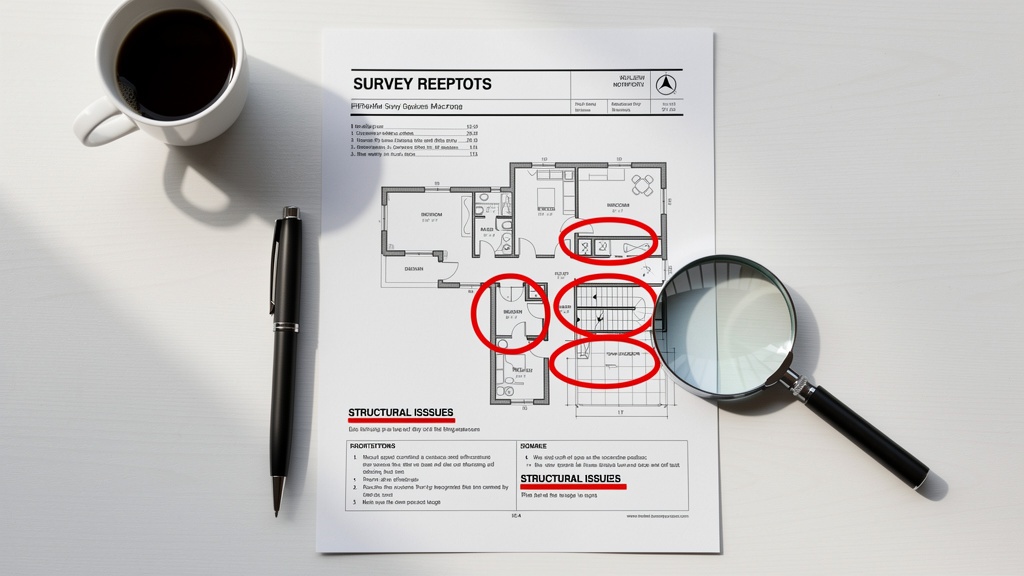
You've received your survey report and it's 45 pages long. There are coloured ratings, technical terms, caveats, and what looks like a lot of problems. Your first instinct is probably either to panic — or to scroll to the summary and try to ignore the rest. Neither approach serves you well.
At Hampton Surveyors, we write our reports to be as clear and usable as possible. But even the clearest survey report contains terminology and conventions that most people haven't encountered before. This guide walks you through how to read a standard RICS Homebuyer Report or Level 3 Building Survey report systematically, so you come away knowing exactly what you're dealing with and what to do next.
Understanding Condition Ratings
The most important thing to understand is the condition rating system. RICS surveys use a traffic light system with three ratings:
No repair is currently needed. Normal maintenance required. Green.
Defects that need repairing or replacing but are not considered urgent or serious. Amber.
Defects that are serious or need to be investigated urgently. Red.
A CR3 (red) rating does not automatically mean the property is a disaster. It means the surveyor considers the item significant enough to flag as a priority. The nature and cost of the CR3 item matters enormously — a CR3 for a failed flat roof over an extension is a very different matter from a CR3 for suspected active subsidence.
CR2 (amber) items are not trivial. A report might show 12 amber items alongside 2 red items. The cumulative cost of those amber items — gutters to clear, repointing needed, internal decorations deteriorating, an old boiler to replace — can add up to many thousands of pounds. Don't dismiss amber ratings.
The Structure of a Typical Report
A standard RICS Level 2 Homebuyer Report is organised into sections covering different parts of the property. Here is what each section covers:
Section A: Scope of Inspection
This confirms what the survey does and does not cover, what the surveyor inspected (and, importantly, what they could not access or inspect), and the general limitations of the survey. Read this carefully — it tells you the boundaries of the advice you've received.
Section B: About the Property
General description of the property: type, age, construction method, number of rooms, and any extensions or alterations. This section also notes whether the surveyor believed the property to be of standard construction.
Section C: Outside the Property
Covers the external fabric: roof coverings, chimney stacks, rainwater goods (gutters and downpipes), main walls, windows, external decorations, outside areas (drives, paths, boundaries). Many defects appear first in this section.
Section D: Inside the Property
Covers the internal elements: roof structure (as viewed from the loft hatch), ceilings, internal walls, floors, fireplaces, internal woodwork, bathroom fittings. This is where damp penetration, structural movement, timber decay and other internal defects are reported.
Section E: Services
A summary of the main services (gas, electricity, water, heating, drainage). Important caveat: surveyors cannot test services — they give a general visual assessment only. A boiler described as "apparently functioning at the time of inspection" has not been pressure-tested or electrically checked. You should always commission a full Gas Safe boiler service and an EICR (Electrical Installation Condition Report) before exchange.
Section F: Grounds
Garages, outbuildings, boundaries, retaining walls, drainage channels. Items here are often overlooked but can be costly — a failing boundary wall or a garage in poor condition can easily represent a five-figure repair bill.
Section G: Issues for Your Legal Advisers
This section flags items that need your solicitor's attention: evidence of alterations that may require building regulation approval, unusual boundary arrangements, presence of Japanese knotweed, suspected flying freeholds, and so on. These are not defects in the fabric of the building — they are legal or title issues that your conveyancing solicitor must investigate.
Section H: Risks
The surveyor's summary of the most significant risks — to the building, to the grounds, and to people. This section often includes reference to ground stability risks (subsidence, flooding), environmental risks (radon, contamination), and specific health and safety hazards (asbestos, lead paint). Each risk is rated and the surveyor gives advice on further investigations where necessary.
Section I: Summary of Condition Ratings
A single-page summary table showing the condition rating for every element inspected. This is the first page many people turn to — but read it in conjunction with the full report, not as a substitute for it. The summary doesn't tell you why something is rated red or what you should do about it.
Phrases to Watch For
Survey reports use specific phrases that carry particular weight. Here are the ones you should pay most attention to:
- "Further investigation recommended" — The surveyor has found something that warrants specialist investigation, usually by a structural engineer, damp specialist, or drainage contractor. This is not optional: act on these recommendations.
- "Could not be inspected / limited inspection" — Areas that were inaccessible (locked, carpeted, full of contents) could not be assessed. This doesn't mean there's no problem — it means the surveyor couldn't get there to find out. Consider asking the vendor for access before exchange.
- "Evidence of previous movement / repair" — The building has moved in the past and may have been repaired. The critical question is whether movement is ongoing or historic. Your surveyor will advise, but if there's any doubt, a specialist structural report is worthwhile.
- "Appeared to be functioning at the time of inspection" — This is the surveyor's limit on services. It means the boiler lit and the taps ran — nothing more.
- "Typical for a property of this age and type" — The surveyor is normalising a defect, indicating that while it exists, it is entirely expected in properties of this era and does not represent unusual risk.
- "Urgent attention required" — This is rare but serious. Something must be dealt with immediately — usually for safety reasons or to prevent rapid deterioration.
Using the Report to Negotiate
One of the most powerful uses of your survey report is as a negotiation tool. If the survey reveals defects — particularly CR3 items or recommended further investigations — you are in a strong position to renegotiate the purchase price or ask the vendor to carry out repairs before exchange.
Here is how to approach it:
- Call your surveyor first. Before doing anything else, call the surveyor who carried out your report. Most surveyors (including all Hampton Surveyors RICS-regulated surveyors) are happy to talk you through the report findings at no extra charge. They can help you understand what's significant, what's routine, and what questions to ask specialists.
- Get specialist quotes for CR3 items. Contact a specialist contractor — structural engineer, damp specialist, roofing contractor, drainage firm — to get a written quote for the remedial works. This gives you a concrete, evidenced figure for your negotiation.
- Make a reasonable, evidenced request. Rather than making a blanket "knock off £20,000" demand, present the vendor with your specialist quotes and ask for a price reduction reflecting the documented repair costs, or ask them to carry out the works (with evidence of completion) before exchange.
- Be proportionate. Don't use a borderline CR2 item to try to renegotiate a major discount. Vendors and their agents will see through unreasonable claims quickly. Focus on the genuine CR3 items and the specialist quotes.
When Should You Pull Out of a Purchase?
Sometimes the right decision after a survey is to walk away. This is not a decision to take lightly — conveyancing costs are real — but it is sometimes the correct one. Consider pulling out if:
- The survey reveals confirmed active subsidence with an unknown or very large remedial cost
- There is widespread structural failure — failing lintels, settlement cracks throughout, roof structure in poor condition
- Japanese knotweed is present on the property (this can affect mortgage availability)
- The property has significant illegal alterations (removed structural walls, blocked escape windows) with no building regulations completion certificate
- The vendor refuses to negotiate despite documented significant defects
In most other cases, a bad survey result is not a reason to pull out — it is a reason to negotiate hard, commission specialist reports, and make an informed decision with your eyes open.
"I was completely overwhelmed by my survey report — it was 62 pages and full of amber and red ratings. Sarah from Hampton Surveyors spent 40 minutes on the phone with me going through every significant item, explaining which ones mattered and which were routine. She helped me negotiate £11,500 off the purchase price. Absolutely priceless service."
— Amara J., First-Time Buyer, Feltham
Frequently Asked Questions
A report with many amber (CR2) items is not unusual — especially for an older property. What matters is the nature of those items and their estimated repair costs. Work through each amber item, consider whether it's something you can live with, something that needs attention soon, or something that needs investigation. Your surveyor can help you prioritise.
Yes — if the vendor agrees to carry out repairs before exchange, you can ask your surveyor to carry out a re-inspection to confirm the works have been completed satisfactorily. There is usually an additional fee for this, but for significant repair items it is a sensible precaution.
Start by calling the surveyor to discuss your concerns. Most apparent disagreements are resolved through a conversation — the surveyor can explain their reasoning and you can ask follow-up questions. If you believe the report contains a genuine error of fact, raise this formally in writing. RICS Regulated firms like Hampton Surveyors have a formal complaints procedure, and the RICS also provides a dispute resolution service.
A Level 2 RICS Homebuyer Report includes a market valuation and an insurance reinstatement cost. A Level 3 Building Survey does not include a valuation as standard — if you need a formal valuation alongside a structural survey, discuss this with your surveyor at the time of booking.
Survey reports have no formal expiry date, but they reflect the condition of the property at the time of inspection. If your purchase takes significantly longer than expected — or if you come back to the same property months later — you should consider whether a re-inspection is appropriate, particularly if the property has been empty or subject to ongoing works during the intervening period.
Need Help Understanding Your Report?
Hampton Surveyors clients get a free post-survey phone consultation. Our RICS surveyors will walk you through every finding and answer your questions.
Book a Survey Today